The Long Journey 긴 여정
The Bible didn't arrive in Korea by accident. It traveled more than two thousand years and across three continents, through empires and printing presses, before reaching these shores. The route matters — it shapes everything that follows. 성경은 우연히 한국에 온 것이 아닙니다. 이천 년이 넘는 세월과 세 대륙을 가로질러, 제국들과 인쇄기를 거쳐 이 땅에 도달했습니다. 그 경로는 중요합니다 — 그것이 이후의 모든 것을 형성하기 때문입니다.
The Septuagint70인역 (셉투아긴트)
In Alexandria, Jewish scholars translate the Hebrew Scriptures into Greek — the first great translation of the Bible. It becomes the Scripture of the Greek-speaking world and then of the early church, and even the Latin Vulgate that follows is built upon it. Here the Bible begins its life as a translated book.알렉산드리아에서 유대 학자들이 히브리 성경을 그리스어로 옮깁니다 — 성경 최초의 위대한 번역입니다. 그리스어권 세계와 뒤이어 초대 교회의 성경이 되었고, 이후의 라틴어 불가타 성경도 그 위에 세워졌습니다. 여기서 성경은 번역된 책으로서의 삶을 시작합니다.
Jerome's Vulgate제롬의 불가타 성경
The Bible translated into Latin — the universal language of the Roman world and the Western church for a thousand years. Scripture becomes institution.성경이 라틴어로 번역됩니다. 로마 세계와 서방 교회의 공용어로 천 년간 사용되며 성경은 제도가 됩니다.
Wycliffe's English Bible위클리프 영어 성경
John Wycliffe and his circle translate the whole Bible into English for the first time — from the Latin Vulgate, copied by hand, before printing exists. Condemned as heresy, it is the first cry of the vernacular impulse: that ordinary people should read Scripture in their own tongue.존 위클리프와 그의 동료들이 라틴어 불가타를 바탕으로 성경 전체를 처음으로 영어로 옮깁니다 — 인쇄술이 등장하기 전, 손으로 필사하여. 이단으로 정죄되었지만, 평범한 사람들이 자기 언어로 성경을 읽어야 한다는 자국어 운동의 첫 외침이었습니다.
Gutenberg's Press구텐베르크 인쇄기
The Bible becomes mass-producible. The first major book printed in Europe is a Bible. Literacy and Scripture begin their long entanglement.성경이 대량 생산 가능해집니다. 유럽에서 인쇄된 첫 번째 주요 책은 성경입니다. 문해력과 성경이 오랜 연결을 시작합니다.
Erasmus's Greek New Testament에라스무스의 그리스어 신약성경
The Dutch scholar Erasmus prints the New Testament in its original Greek for the first time. From this text Luther and Tyndale translate — the recovered original tongue becomes the wellspring of the vernacular Bibles that follow.네덜란드 학자 에라스무스가 신약성경을 처음으로 그 원어인 그리스어로 인쇄합니다. 이 본문에서 루터와 틴들이 번역했고, 되찾은 원어가 뒤이은 자국어 성경들의 원천이 됩니다.
Luther's German New Testament루터의 독일어 신약성경
The Reformation principle: every believer should read Scripture in their own language. This idea will arrive in Korea 360 years later — and remake the society.종교개혁의 원칙: 모든 신자가 자신의 언어로 성경을 읽어야 한다. 이 사상은 360년 후 한국에 도달하여 사회를 변화시킵니다.
First Bibles on the Korean Coast한국 해안의 첫 번째 성경
British warship HMS Alceste surveys the West Sea coast. The crew distributes Chinese Bibles. Korea is closed to outsiders; the books are a curiosity, no more.영국 군함 알세스테호가 서해안을 탐사합니다. 승무원들이 중국어 성경을 배포합니다. 조선은 외부인에게 닫혀 있어 책들은 호기심 거리에 불과합니다.
Karl Gützlaff Reaches Korea칼 귀츨라프(Karl Gützlaff)의 한국 도착
German missionary Gützlaff sails along the Korean coast, distributing Chinese Bibles and reporting to the West that Koreans seemed open to receiving them. His report plants a seed. He will later translate scripture for Thailand too — a thread that connects Wing 4.독일 선교사 귀츨라프가 한국 해안을 항해하며 중국어 성경을 배포하고 조선인들이 성경을 받아들일 것 같다고 서방에 보고합니다. 그의 보고가 씨앗을 심습니다.
Robert Thomas and the General Sherman로버트 토마스(Robert Thomas)와 제너럴셔먼호
Welsh missionary Robert Thomas sails up the Taedong River on the American ship General Sherman, distributing Chinese Bibles. The ship is burned; Thomas is martyred on the riverbank — reportedly handing his last Bible to the soldier who killed him. Accounts say that soldier's nephew later became a Christian.웨일스 선교사 로버트 토마스가 제너럴셔먼호를 타고 대동강을 거슬러 올라가며 중국어 성경을 배포합니다. 배는 불태워지고 토마스는 강가에서 순교합니다.
John Ross Meets Korea at the Border존 로스, 국경에서 한국을 만나다
Scottish missionary John Ross, based in Manchuria, meets Korean traders at the Goryeo Gate (고려문) on the Manchurian-Korean border. He hires them as language teachers and Bible translators. The road to the first Korean Scripture begins not in Korea, but on its doorstep.만주에 주재하는 스코틀랜드 선교사 존 로스(John Ross)가 고려문에서 한국 상인들을 만납니다. 그는 그들을 언어 교사이자 성경 번역가로 고용합니다.
First Korean Gospel Printed최초의 한국어 복음서 인쇄
John Ross publishes Luke's Gospel in Korean — the first Scripture ever printed in the Korean language. Printed in Manchuria. Smuggled across the border by Korean colporteurs. The book enters the country before any missionary does.존 로스가 한국어로 누가복음을 출판합니다 — 한국어로 인쇄된 최초의 성경입니다. 만주에서 인쇄되어 한국인 권서인들에 의해 국경을 넘어 밀반입됩니다.
A Korean trader from the north, Sŏ Sang-ryun (서상륜) met John Ross in Manchuria and became one of his Korean language collaborators and co-translators. After helping produce the 1882 Ross Version, he carried Scripture across the Yalu River into Sorae — at personal risk, while Korea was still closed. At Sorae, Koreans gathered and formed what is recognized as the first self-established Korean Protestant church, organized by Koreans before any Western missionary had set foot in the country. Sŏ Sang-ryun (서상륜) is the Manchurian side of the Bible arrival story; Yi Su-jeong (이수정)—featured in Room 1.2—is the Japan side. Both were Korean agents — not passive recipients — of Bible introduction. 북부 지방 출신 한국인 상인 서상륜은 만주에서 존 로스를 만나 언어 협력자이자 공동 번역가가 되었습니다. 1882년 로스역 성경 작업에 참여한 후, 조선이 외부인에게 닫혀 있던 시기에 개인적 위험을 감수하며 압록강을 건너 소래에 성경을 가져갔습니다. 소래에서 한국인들이 모여 서양 선교사가 입국하기 전에 스스로 조직한 첫 자립 한국 개신교회가 세워졌습니다. 서상륜은 만주 측, 이수정(전시실 1.2)은 일본 측 — 둘 다 수신자가 아닌 행위자였습니다.
The Koreans Who Asked First 먼저 요청한 한국인들
Most histories of the Korean church begin with Western missionaries. They should begin with the Koreans who went looking first — twice, a century apart. In 1784, a circle of scholar-readers founded a church of their own before any priest arrived. A century later, Yi Su-jeong (이수정) is the hinge of the second asking — the man who translated Scripture in Tokyo, then wrote the letter that brought Underwood and Appenzeller to Korea. 한국 교회의 역사는 대부분 서양 선교사들로 시작합니다. 그러나 먼저 찾아 나선 한국인들로 시작해야 합니다 — 한 세기를 사이에 두고 두 번. 1784년, 한 무리의 학자-독자들이 사제가 오기도 전에 스스로 교회를 세웠습니다. 한 세기 뒤, 이수정은 두 번째 물음의 핵심 인물입니다 — 도쿄에서 성경을 번역하고, 언더우드와 아펜젤러를 한국에 오게 한 편지를 쓴 사람입니다.
The First Asking — 1784첫 번째 물음 — 1784년
Before any missionary came, Koreans went looking. In the 1770s a circle of scholars around Yi Byeok (이벽) studied Western-Learning books smuggled from Beijing — among them Matteo Ricci's The True Meaning of the Lord of Heaven (천주실의 / 天主實義). In 1784 one of them, Yi Seung-hun (이승훈), traveled to Beijing, was baptized, and returned to a church Koreans had founded for themselves — a decade before the first priest arrived. Korea is the rare country whose church began not with missionaries but with readers. It came at a price: waves of martyrdom from 1791 to 1866. 선교사가 오기 전에, 한국인들이 먼저 찾아 나섰습니다. 1770년대, 이벽을 중심으로 한 학자들의 모임은 베이징에서 들여온 서학 서적 — 마테오 리치의 『천주실의(天主實義)』를 비롯해 — 을 연구했습니다. 1784년, 그중 한 사람인 이승훈이 베이징으로 가 세례를 받고 돌아와, 한국인들이 스스로 세운 교회를 만났습니다 — 첫 사제가 도착하기 십 년 전이었습니다. 한국은 교회가 선교사가 아니라 독자들에게서 시작된 드문 나라입니다. 그 대가는 컸습니다: 1791년부터 1866년까지 이어진 순교의 물결이었습니다.
A century later, the same impulse stirred again — this time among Protestants. 한 세기 뒤, 같은 열망이 다시 일어났습니다 — 이번에는 개신교인들 사이에서.
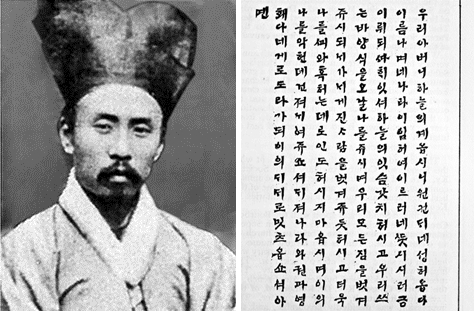
Born in 1842 into the yangban class. A government official and Confucian scholar, trained in the classical tradition. Selected to join the Korean mission to Japan in 1882. What he encountered there changed the trajectory of Korean Christianity. 1842년 양반 계층으로 태어났습니다. 관리이자 유학자로 고전 전통에서 훈련받았습니다. 1882년 일본에 파견된 조선 사절단에 선발되었습니다. 그곳에서 만난 것이 한국 기독교의 궤적을 바꾸었습니다.
Wikimedia Commons · Public domain ↗Tokyo: Meeting Tsuda Sen도쿄: 쓰다 센과의 만남
In Tokyo, Yi Su-jeong (이수정) meets Tsuda Sen — a Japanese agricultural reformer and devout Christian. He is struck not by arguments, but by the quality of the man. He begins studying the Christian faith.도쿄에서 이수정은 일본 농업 개혁가이자 독실한 기독교인인 쓰다 센을 만납니다. 논증이 아니라 그 사람의 인격에 감동받아 기독교 신앙을 공부하기 시작합니다.
Baptism and the Beginning of Translation세례와 번역의 시작
Yi Su-jeong (이수정) is baptized by Henry Loomis of the American Bible Society. He begins annotating a Chinese Bible with Korean readings written in Hangeul — making Scripture accessible to Korean readers for the first time in a format they could use.이수정이 미국성서공회의 헨리 루미스에게 세례를 받습니다. 한국 독자들이 읽을 수 있도록 중국어 성경에 한글 독음을 달기 시작합니다.
Mark's Gospel Published — and the Letter마가복음 출판과 편지
The American Bible Society publishes the translation of Mark's Gospel by Yi Su-jeong (이수정) in Tokyo. Simultaneously, Yi writes to American mission boards: "Come to Korea." The letter reaches the Presbyterian and Methodist boards directly. It is not a general appeal — it is a specific request from a Korean to specific people.미국성서공회가 도쿄에서 이수정의 마가복음 번역을 출판합니다. 동시에 이수정은 미국 선교 단체에 편지를 씁니다: "조선으로 오십시오."
Easter Sunday: Underwood and Appenzeller Arrive부활절 주일: 언더우드와 아펜젤러 도착
April 5, 1885 — Easter Sunday. Horace G. Underwood (Presbyterian) and Henry G. Appenzeller (Methodist) arrive in Incheon harbor. They came because of the letter from Yi Su-jeong (이수정). Underwood carried the Mark translation by Yi Su-jeong (이수정) in his luggage. The hinge has turned.1885년 4월 5일 — 부활절 주일. 호레이스 언더우드(장로교)와 헨리 아펜젤러(감리교)가 인천 항구에 도착합니다. 이수정의 편지 때문에 왔습니다.
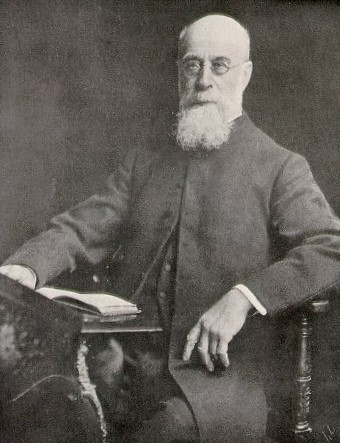
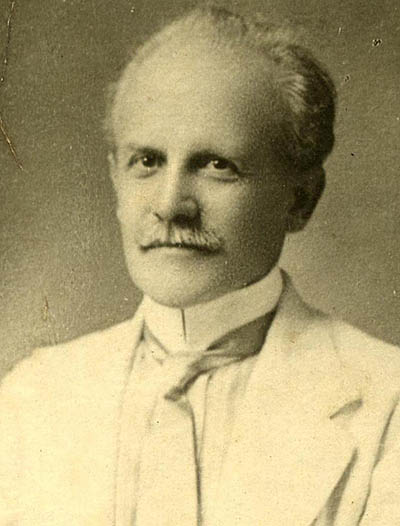
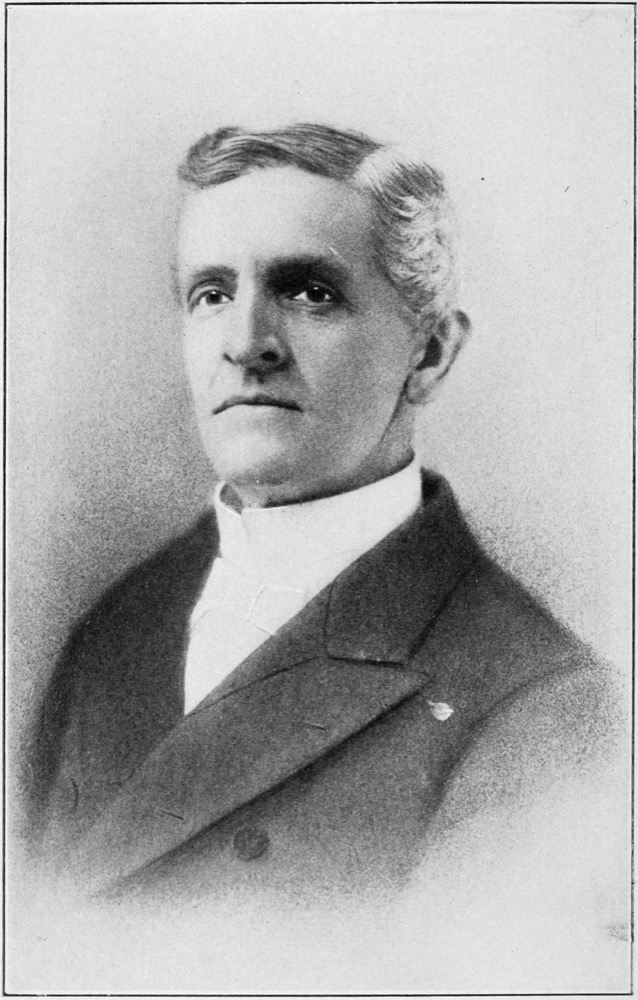
"We were received with every possible mark of kindness, and the people seemed to be very much pleased to see us." "우리는 최대한 친절하게 환영받았고, 백성들은 우리를 보고 매우 기뻐하는 것 같았습니다."
— Henry Appenzeller, April 1885
A Note on the Names이름에 관하여
Ask an older Korean Catholic "Are you a Christian?" and you may hear "No — I'm Catholic." It isn't a denial of Christ. In everyday Korean, 기독교 (Gidokgyo, "Christ-religion") came to mean Protestant specifically, while Catholics are 천주교 (Cheonjugyo, "the religion of the Lord of Heaven"). The umbrella term for both is 그리스도교 (Geuriseudogyo); Protestants are formally 개신교 (Gaesin-gyo). And 천주교 is the older name — from 天主, "Lord of Heaven," the term in the very book the 1784 seekers were reading. The everyday answer is a living fossil of the Bible's two arrivals in Korea. (Among younger Koreans, the line is softening.) 나이 든 한국 천주교인에게 "기독교인이세요?"라고 물으면 "아니요, 천주교인입니다"라는 답을 들을 수 있습니다. 그리스도를 부인하는 것이 아닙니다. 일상 한국어에서 '기독교'는 특히 개신교를 뜻하게 되었고, 천주교인은 '천주교(天主敎)'로 구분됩니다. 둘을 아우르는 말은 '그리스도교'이며, 개신교는 공식적으로 '개신교'라 합니다. 그리고 '천주교'는 더 오래된 이름입니다 — 1784년의 구도자들이 읽던 바로 그 책에 나오는 '천주(天主)', 곧 '하늘의 주인'에서 왔습니다. 이 일상의 대답은 성경이 한국에 두 번 도래한 역사가 남긴 살아 있는 화석입니다. (젊은 세대에서는 그 경계가 옅어지고 있습니다.)
The Translation Spine 번역의 척추
The translation line actually runs from 1784, not 1882 — two beginnings, a century apart, both by Korean hands reaching for the Book first. The Korean Bible did not arrive complete in either case — it was built, revised, and rebuilt over two centuries. Each edition reflects the era that produced it. 번역의 줄기는 사실 1882년이 아니라 1784년부터 시작됩니다 — 한 세기를 사이에 둔 두 번의 시작이며, 두 번 모두 한국인의 손이 먼저 성경을 찾아 나선 결과입니다. 한국어 성경은 어느 쪽도 완성본으로 도착하지 않았습니다 — 두 세기에 걸쳐 만들어지고, 개정되고, 재건되었습니다. 각 판본은 그것을 낳은 시대를 비춥니다.
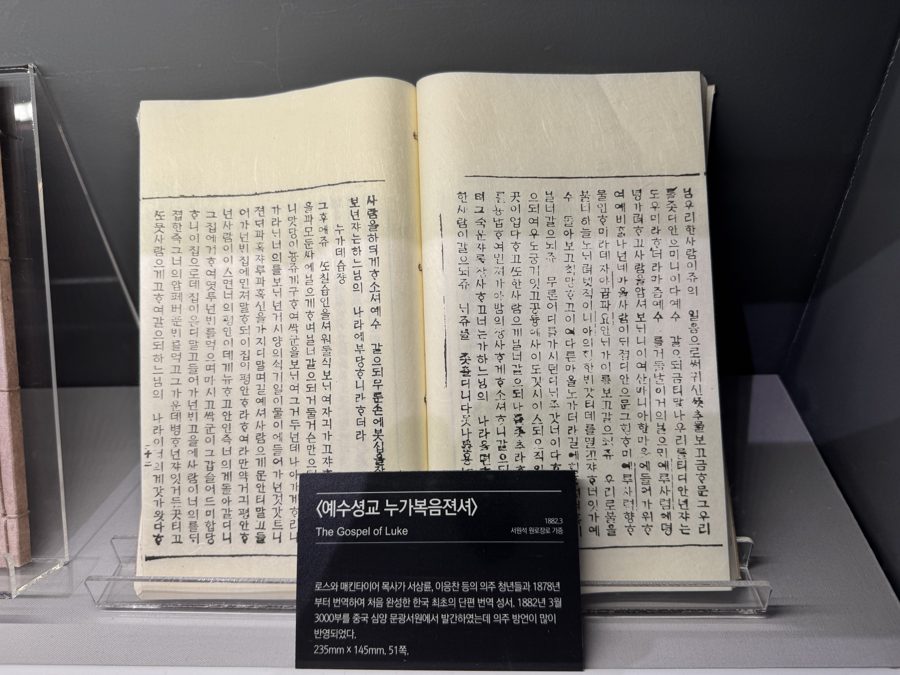
사람을 하딕게 호소셔 … 나라에 부당호니라 호더라
"Let me first go bid them farewell, which are at home at my house. And Jesus said unto him, No man, having put his hand to the plough, and looking back, is fit for the kingdom of God."
— Luke 9:61–62, Ross Version, 1882 · KJV rendering shown for reference
A call to complete, no-looking-back commitment — among the very first words of Scripture a Korean reader ever held in their own language.
참고: 정확한 옛 표기 전체는 전문가의 확인이 필요합니다. 위 인용은 사진으로 판독한 결과입니다. (Note: full old-orthography transcription should be verified by a specialist. The reading above is from photographic identification.)
Image courtesy of Cambridge University Library. © Bible Society. Used under CC BY-NC 4.0.이미지 제공: 케임브리지 대학교 도서관. © Bible Society. CC BY-NC 4.0 라이선스로 사용. Cambridge Digital Library ↗
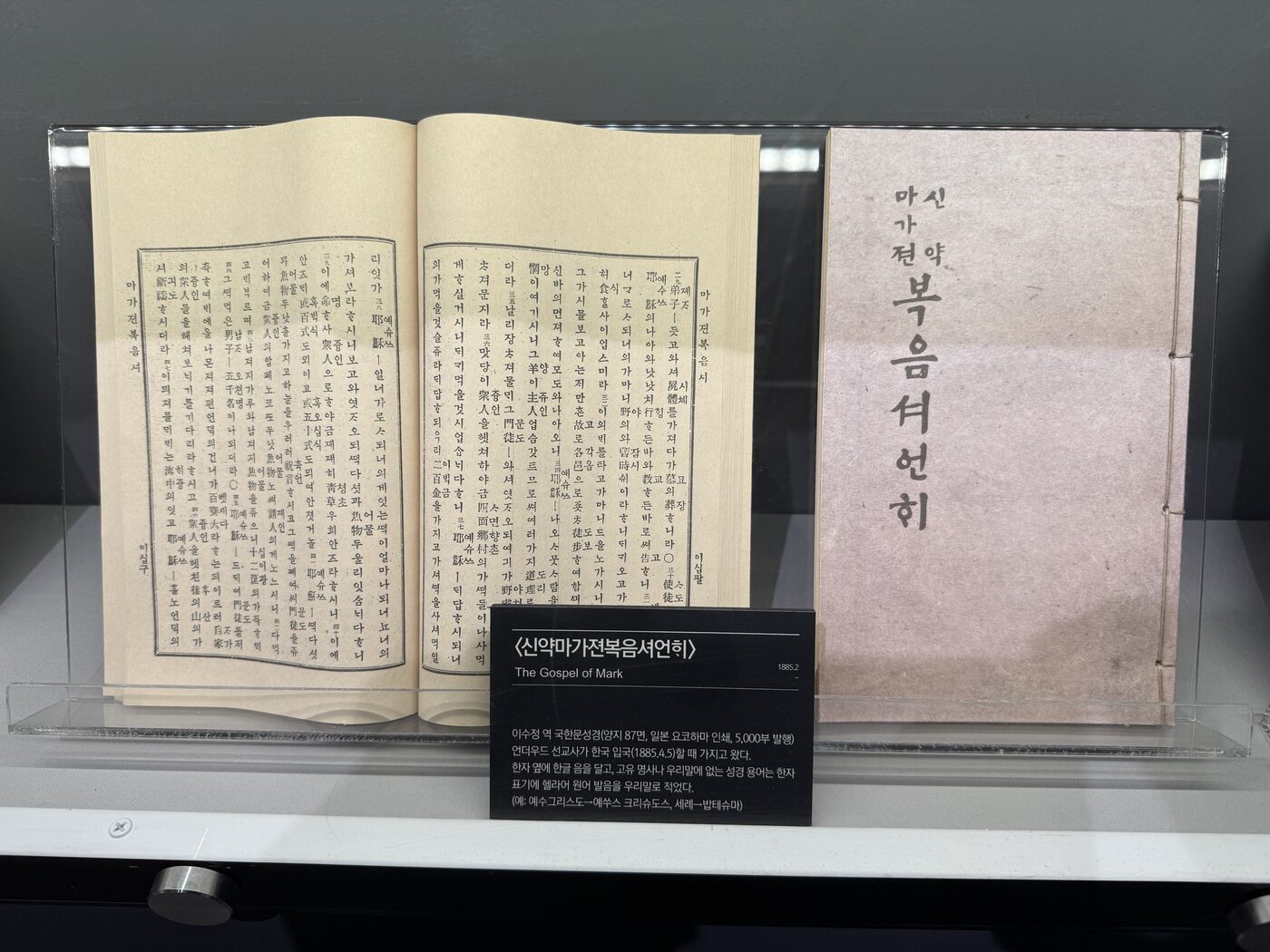
하ᄂᆞᆯ을 우러러 츅ᄉᆞᄒᆞ시고 … ᄯᅥᆨ을 ᄯᅦ여 제ᄌᆞ를 주어 … 두 낫 어물을 논화 주니
"And when he had taken the five loaves and the two fishes, he looked up to heaven, and blessed, and brake the loaves, and gave them to his disciples to set before them; and the two fishes divided he among them all."
— Mark 6:41, Mark Gospel translated by Yi Su-jeong (이수정), Tokyo, 1885
The moment of provision — looking up before breaking the bread.
참고: 정확한 옛 표기 전체는 전문가의 확인이 필요합니다. 위 인용은 사진으로 판독한 결과입니다. (Note: full old-orthography transcription should be verified by a specialist. The reading above is from photographic identification.)
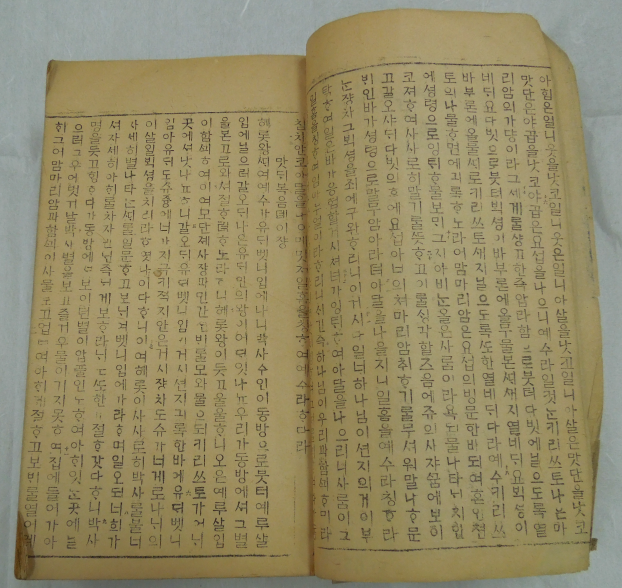
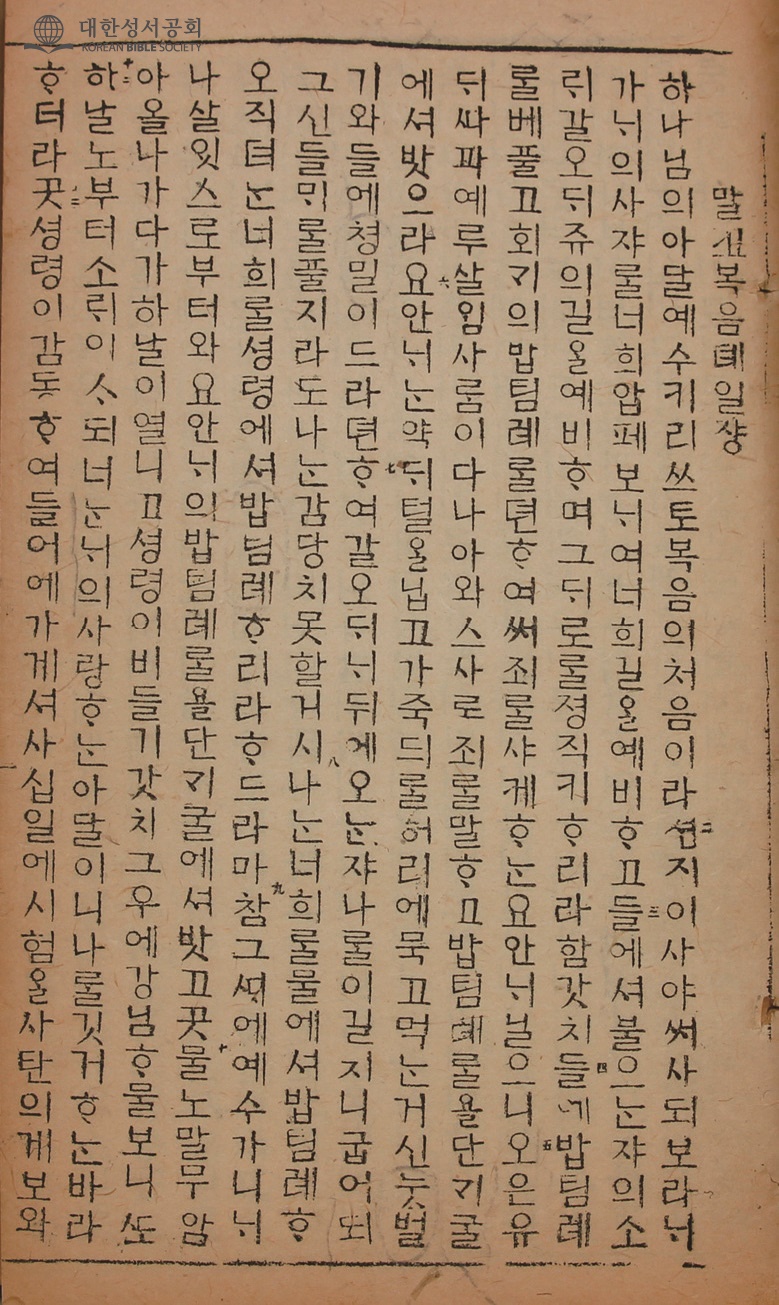
아들을 낳으리니 이름을 예수라 하라 이는 그가 자기 백성을 그들의 죄에서 구원할 자이심이라
"And she shall bring forth a son, and thou shalt call his name Jesus: for he shall save his people from their sins."
— Matthew 1:21, visible on the photographed page · modern Korean and KJV renderings
The first chapter of the first Gospel announces why the child will be called Jesus.첫 복음서의 첫 장은 아기의 이름을 예수라 할 이유를 선포합니다.
The photograph preserves the 1887 spelling; the Korean quotation above is presented in modern spelling for readability.사진에는 1887년의 옛 표기가 보이며, 위 한국어 인용은 읽기 쉽도록 현대 표기로 제시했습니다.
Image:이미지: Wikimedia Commons · Public domain
Image: (재)대한성서공회 (Korean Bible Society), 창립 120주년 한글 성서 전시회 자료집이미지 제공: (재)대한성서공회, 창립 120주년 한글 성서 전시회 자료집
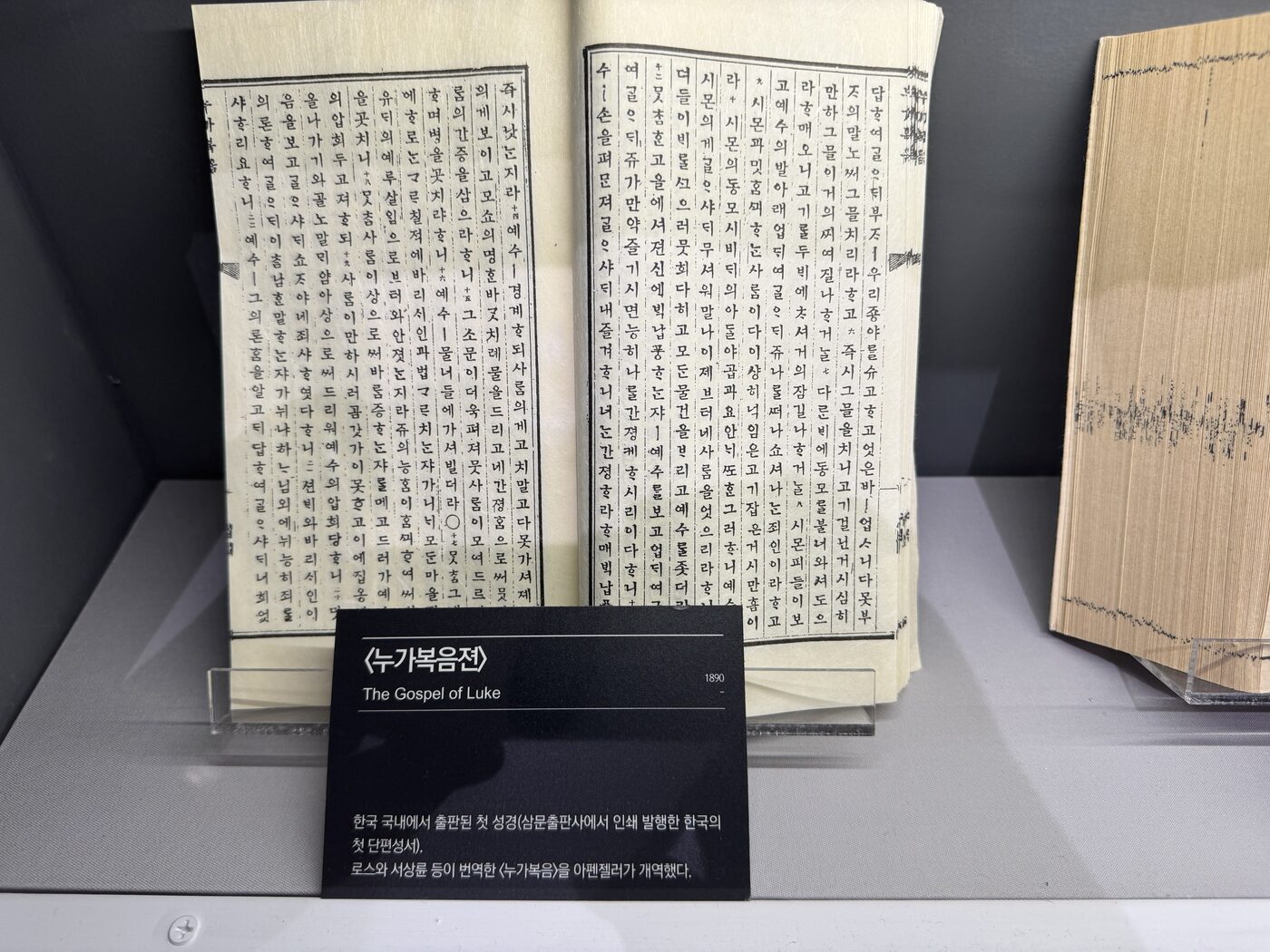
시몬의게 골으샤디 무셔워말나 이제브터 네 사롬을 엇으리라
"And Jesus said unto Simon, Fear not; from henceforth thou shalt catch men."
— Luke 5:10, 1890 Gospel of Luke (first Bible printed on Korean soil)
The calling of Simon Peter — spoken after he confessed himself unworthy.
참고: 정확한 옛 표기 전체는 전문가의 확인이 필요합니다. 위 인용은 사진으로 판독한 결과입니다. (Note: full old-orthography transcription should be verified by a specialist. The reading above is from photographic identification.)
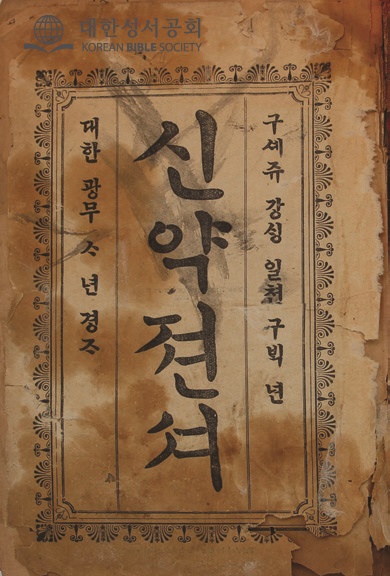
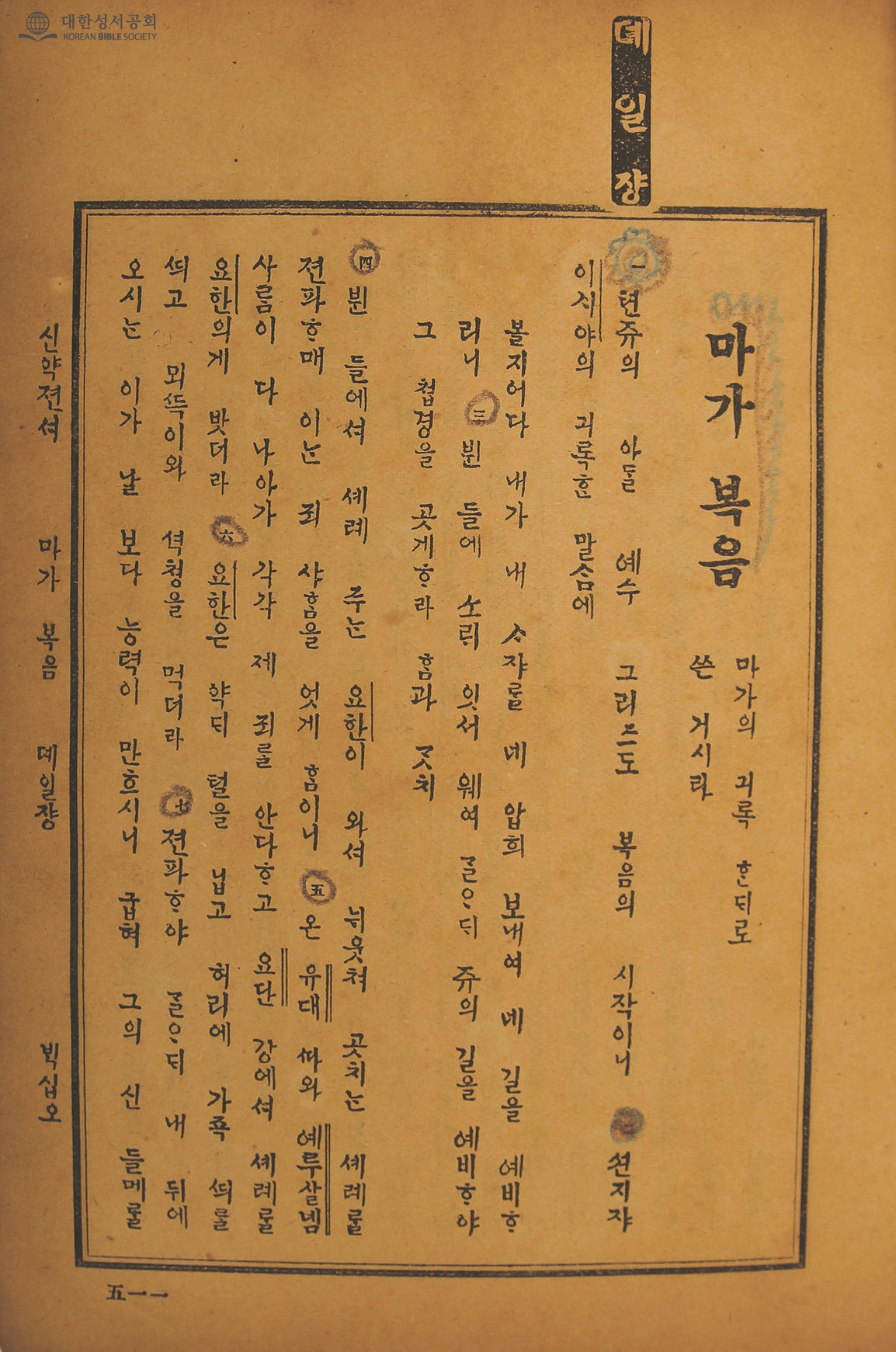
Image: (재)대한성서공회 (Korean Bible Society), 창립 120주년 한글 성서 전시회 자료집이미지 제공: (재)대한성서공회, 창립 120주년 한글 성서 전시회 자료집
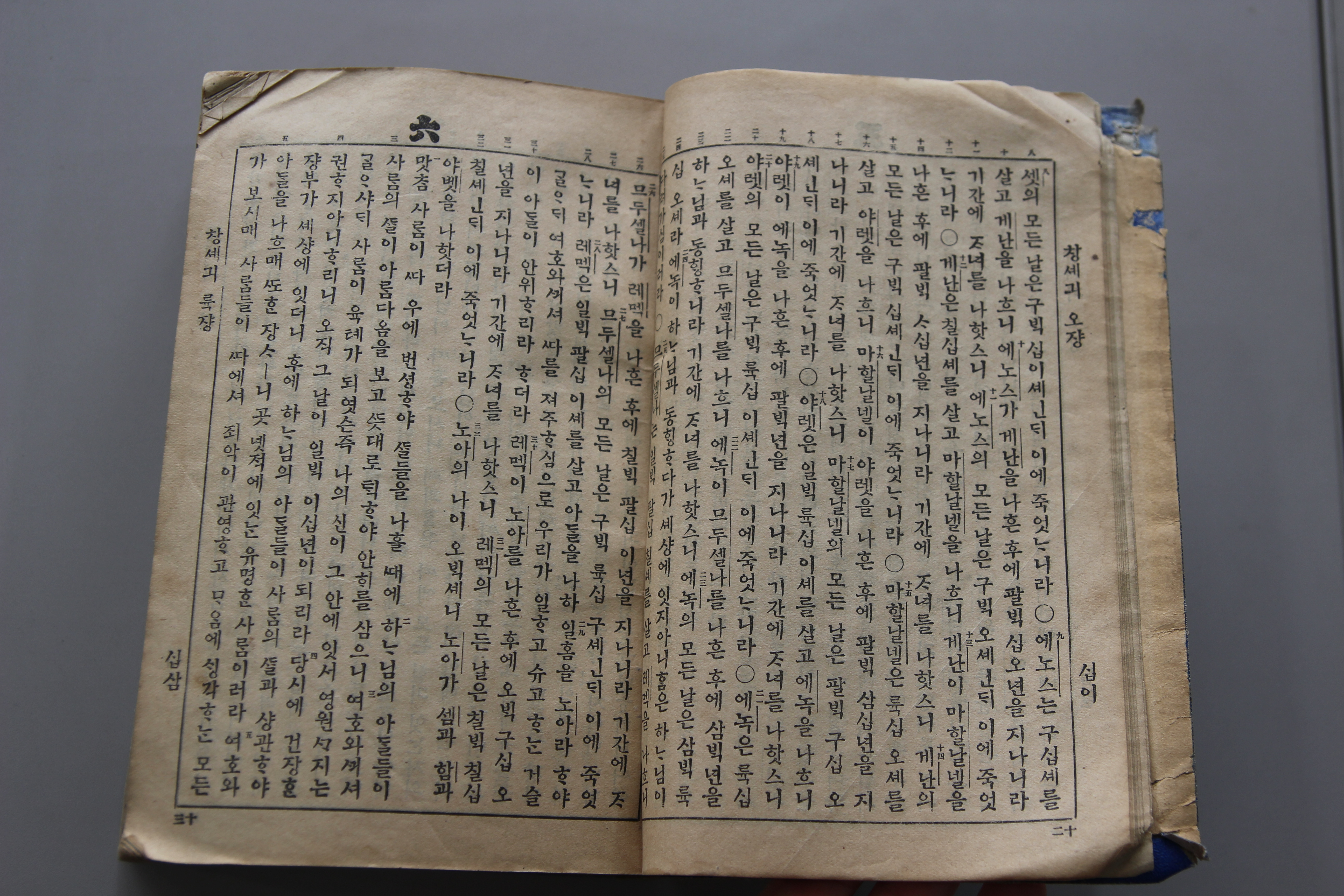
에녹이 하ᄂᆞ님과 동힝ᄒᆞ다가 … 세샹에 잇지 아니ᄒᆞ홈은 하ᄂᆞ님이 저를 취ᄒᆞ심이러라
"And Enoch walked with God: and he was not; for God took him."
— Genesis 5:24, Complete Korean Bible (셩경전서), 1911
The one line in a chapter of genealogies that breaks the pattern — everyone else in Genesis 5 simply dies; Enoch does not.
참고: 정확한 옛 표기 전체는 전문가의 확인이 필요합니다. 위 인용은 사진으로 판독한 결과입니다. (Note: full old-orthography transcription should be verified by a specialist. The reading above is from photographic identification.)
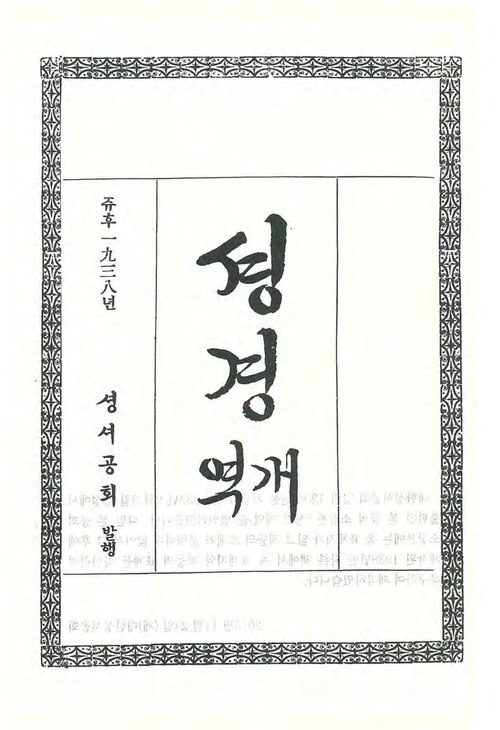
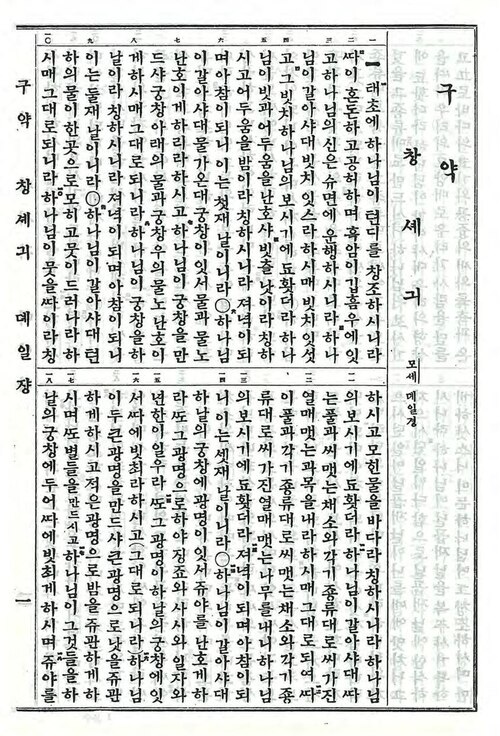
태초에 하나님이 천지를 창조하시니라
"In the beginning God created the heaven and the earth."
— Genesis 1:1, visible on the photographed page · modern Korean and KJV renderings
The completed 1938 revision opens with the Bible's first declaration.1938년 완간된 개역성경은 성경의 첫 선언으로 문을 엽니다.
The scan preserves the 1938 spelling; the Korean quotation above is presented in modern spelling for readability.스캔에는 1938년의 표기가 보이며, 위 한국어 인용은 읽기 쉽도록 현대 표기로 제시했습니다.
Images:이미지: Wikimedia Commons · Public domain
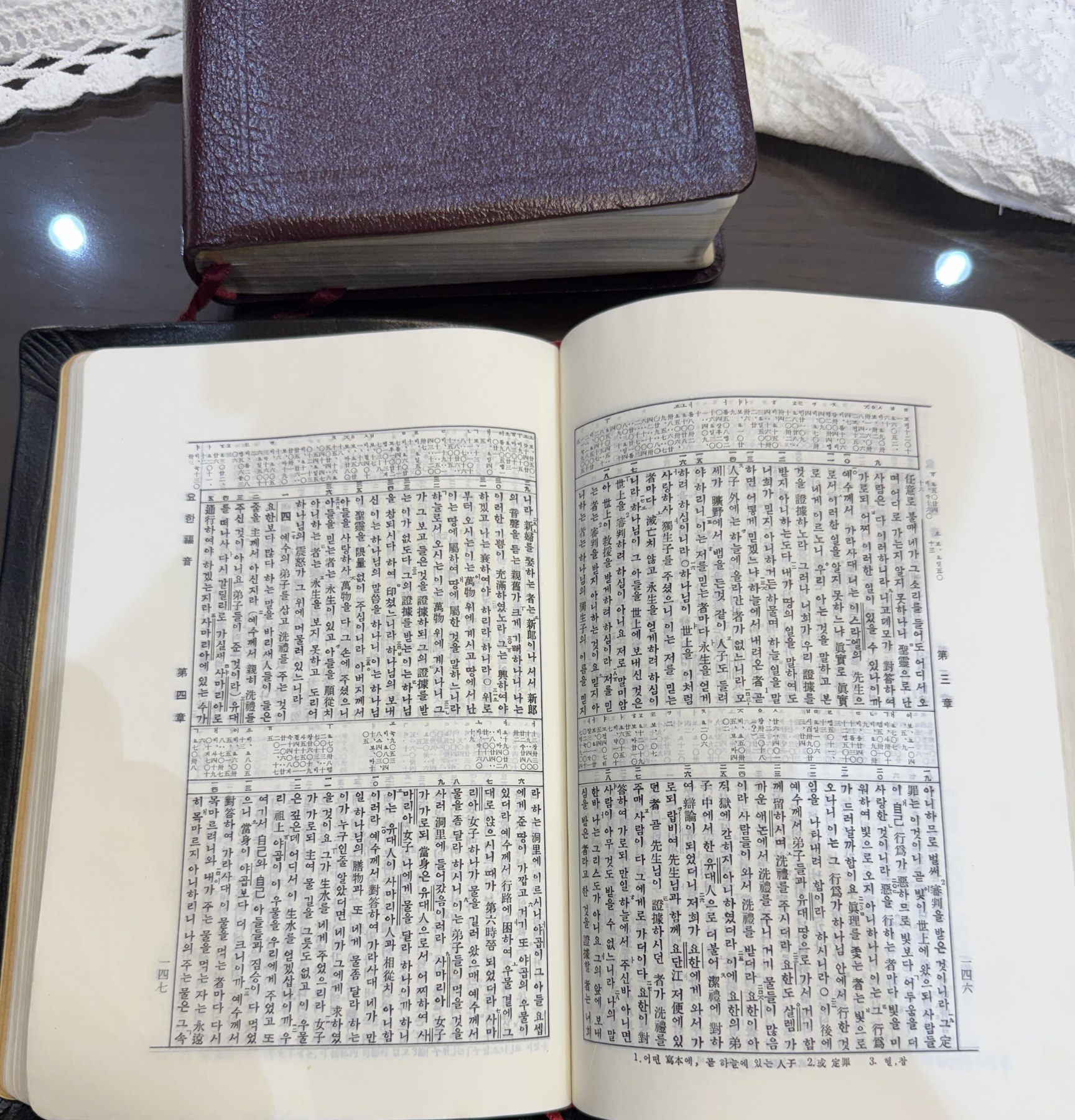
하나님이 世上을 이처럼 사랑하사 獨生子를 주셨으니 이는 저를 밋는 者마다 滅亡치 않고 永生을 엇게 하려 하심이라
"For God so loved the world, that he gave his only begotten Son, that whosoever believeth in him should not perish, but have everlasting life."
— John 3:16, Korean Revised Version (개역한글판), 1956/1961
The most quoted verse in the Bible, photographed from a personal family copy — mixed hanja/hangul script, still readable across generations.
참고: 정확한 옛 표기 전체는 전문가의 확인이 필요합니다. 위 인용은 사진으로 판독한 결과입니다. (Note: full old-orthography transcription should be verified by a specialist. The reading above is from photographic identification.)